Friday, 20 March 2015

Road: Week 2

Today we dived into our second week of being casted in Road.
Our first task of the session was to go through the script and editing out scenes throughout the play. We ended up cutting a lot of sections but these were all parts that had no obvious effect to the stories that they told. We are aware that more cuts will be made such as in my ending scene with Eddie, Brink and Carol but these haven't been confirmed yet.

The most exciting thing of today's session was that we officially started the blocking process of Road. Louise and her brother open the play so this scene was blocked today.
Louise and her brother have a very different sibling relationship to what you would normally expect. The brother is creepy and angry as well as extremely intimidating towards Louise and I get the impression that he is older than her. The brother pays little interest towards his sister so this scene is set with him watching tv and Louise applying make-up in the imaginary mirror i.e. the audience. Louise asks a lot of questions and I get the impression that she does this purely to fill the painful silence that would exist otherwise. "Lets dance" provokes Jake to tip his chair over and stands. This line is meant to be delivered sexually and intimidating which it does because as Jake stands he towers over me (naturally) but it gives off the right image to the audience. "Don't run the immersion..." is the final line for this particular scene which theoretically pushes the brother over the edge and it really winds him up. He then comes up close to me and wipes his oily hands over my face. I could tell, when blocking this scene today, that Jake felt awkward seeing as this was the first time we had both 'performed' this scene and those lines and also that he had to rub his hands all over my face; but I think as soon as he (and me)crosses this awkward stage of this scene then it will be a really creepy and intimidating and the audience will get an immediate insight to how Road and our sibling relationship is messed up.

The next few blocking of scenes went smoothly and it was interesting for me to watch how it will slowly come together. As the other scenes were being blocked I made notes about my character in the first scene. I originally imagined her as though she wasnt intimidated by her brother but now practically performing this scene I can so clearly see that Louise is intimidated by her brother and that he does scare her. She is trying hard to get him out the house to perhaps show the world what this man is really like. But at the same time she continues to act in a motherly way for example questioning why he doesn't go out and that he shouldn't go back to bed etc.

The first couple of scenes are beginning to look really good and I am beginning to see Road take shape which is very exciting. I thoroughly enjoyed playing Louise for the first time and I know that I have a lot to work on to build her up.
Which leads me to- this evening I began looking into the Northern accent. Accents in general aren't my strong point but I am determined to learn a decent accent for Road/Louise. https://www.youtube.com/watch?v=sumStCchdn8 I found this video on youtube which taught me points to remember to learn the Northern accent. Words such as brother are extended from the 'er' sound to a 'broth''a'' sound. These little tips are something I tried working on this evening and I also watched my mouth in the mirror to see how my mouth moves when producing these different sounds.
Even this was quite tricky for me but it is something I will be working on and it's definitely my aim for Road- especially as I am aware that I, naturally, don't have a strong voice on stage so this accent needs to be strong enough for me to project well and also to be understood. I am also looking forward to this challenge of learning the accent as accents in general have been something I have been dying to experiment with in the world of theatre.

Displaying IMG_5331.JPG
Class notes made in these sessions.
Wednesdays session began with recapping the assignment brief, ensuring that we meet all the criteria in order to gain a distinction. We then began blocking more scenes of Road. The scenes we blocked today were scenes that I do not feature in so I knew that it was my responsibility to make the most of my time seeing as we all had to remain in the room (and not go off and rehearse already blocked scenes.)
During this session we began with a scene including Skullery, Dor and Lane. For a minority of the time I was reading through my lines as a memory line learner method that I use in order to learn my lines (repetition.)
But for the rest of the session I observed the blocking process and made notes: For this scene Skullery (played by Matt) was stood on a table to make-do the fact that he will be on a high piece of staging to represent a building rooftop. I really liked how this scene was stage balanced; at the beginning of the scene Dor and Lane are on floor level and Skullery towering over them. This really caught my attention because of the status work we had done the week before.
         Status is often very prominent due to use of levels. It is clear to me, after reading the script and having done bits of research already, that Skullery is the only character whom sits at the very bottom of the status 'chart.' He is alone (no family or friends mentioned) it is assumed that he is homeless and jobless also. The Road is all that he has which makes him hugely proud of it. Returning back to the scene, Skullery being on a higher level than Dor and Lane mixes up Skullery as a character, which I personally thought was very interesting and effective. Dor and Lane then meet Skullery at the top of the building and immediately the status levels are evened out.

SkinLad then runs past and presents a monologue. SkinLad is a character in which Louise does not come across nor mentions but to use my time efficiently in today's session I noted down my first impressions of this "nutter" of a character. As a class we briefly discussed that SkinLad is classed as the nutter because he isn't into the pubbing and clubbing like all the other characters in the play. Because he is different he is classed as a nutter. In this particular monologue (Act 1 Page 21)  he talks about how he was into "fights on Saturday nights" and he talks about how he "came out of the disco" and he explains how he saw the SkinHeads outside. He goes on to explain how he knocked out them all with his magnificent fighting skills he so likes to brag about. But the point I am meaning to make is a few lines on, during this same after-pub fight, he sees a figure and this figure speaks out to him saying "Over to you Buddha." Which made me piece up the puzzle to how he got to how he is in Road now. This figure reminded him of his past life or his spirituality and how his fighting wasn't what he was born for which has lead him to 'read the Dharma. He evens states that he refuses the pornography passed to him at work and is happy continuing with the Dharma.

Dharma: The Dharma is an Indian religion and is known as the "teachings of Buddism." ~Buddha by Jon Ortner.
SkinLad tells us how he refuses things that go against the Dharma such as ' eggs,bacon and chips' and "when the guy on the bus pushes" he reminds himself of the Dharma which acts as his main guideline to living life as a Buddha.

SkinLad, for me, was originally a character that I didn't understand nor did I understand his effect on the play- however after really listening to Nathan recite this piece in today's blocking and after my research I now really like the character; he acts as light relief to the play and because he is so different to all the other characters he has now become my favourite character in the play, so far!!

We then went onto a scene between Brenda and Skullery; and as soon as Brenda enters (played by Hannah) it is apparent that Skullery is only interested in her 'juicy daughter.' It is also apparent that these two characters, before the play, had some sort of connection or was it just meaningless sex...? But I read into it that this wasn't meaningless for Brenda and was to Skullery as he so quickly brushes it off. Although, contrasting from what I have just said, Brenda gets closer and closer to Skullery (in the scene, as she climbs the side of the building) as soon as she gets close enough she asks "lend us a fiver."
This scene showed Brenda in full view, how she uses herself as a way to get money. Again, as a class we discussed how Brenda might just want to be her daughters age again, pubbing and clubbing and enjoying life, hence all the questions in her first scene (Act One Page 7, with Carol.)
"Skullery, that night I felt I'd been shot" Deborah asked us what this line meant and the first response was how it was a sexual reference. Although as we later discussed my first thought was that Brenda felt strongly about Skullery at the time, so the reference to being shot was how hard the love hit her back in the day. This was to a similar conclusion, as a class, that we settled on. Being shot was giving us another reference to how powerful love was and how it made Brenda feel at the time etc.

There, in Road, is a burglary scene, at Mr and Mrs Baulds house. They catch Skullery burguling them and I noted some questions for them to think about, and am meaning to explain my thoughts to Jake and Donna (whom play these two characters.)
I fully understand that this was their first viewing of this scene etc however I wanted to assist them on their reactions and emotions to this.
My house was burgled back in November and it massively effected me, and it's still something that constantly plays on my mind when I'm home alone today. My house was the last place I wanted to go to after college/work and it really did take along time to rebuild the relaxed state in being home alone.
Which made me think that Jakes reaction needs to be a lot more prominent: angry (a manly response) scared etc etc. Although as soon as I had made my point I contradicted myself because was this a thing that people living on Road were used to? Had this happened before to them all? Or did it really bother them, seeing as noone of them have any possessions to be proud of or treasure... So, in the end, the only reason I noted this all down was to give these questions for Jake to think about- in order to help him decide on a reaction, which I think should be the latter; not really being bothered about Skullery. I thought this an interesting suggestion for them both and although I, now, don't think any of this is hugely relevant to this scene because the characters of Road are most probably used to things like being burgled all the time hence why Cartwright was written the dialogue this way; but it was simply something that grabbed my attention.

Asphalt factory: mentioned by a character named Jerry (played by Frank) a old man, lonely who is reminiscing his younger days.He reminises about the good ol' days in which men governed women- 'the men would go to the pub while the women waited in the dance halls until we returned.' This explains the unequality between men and women which was normal in that time and now, in the 80's, it is clear that Jerry would prefer life to have stayed how it was and not for women to grow with more rights (equal).  The ashphalt factory was a factory for creating the substance used for constructing roads/car parks etc. This is what ashphalt is.

Marj Proops: mentioned by Joey (played by Brandon) a young teenager on a starvation protest. Rebecca Marjorie Proops OBE was known as an 'agony aunt' (advice columnist.) She was a well-known column writer, the writer of Dear Marje in the years of 1939 onwards until her death 1996.

Also in Joey's scene Clare mentions that 'she also has no job'. Margaret Thatcher, Prime Minister at the time, "destroyed Britain's manufacturing industry and her policies led to mass unemployment".This wasn't her aim, for 'mass unemployment' but the consequences to her actions whilst in parliament led to this. "Britain was struggling with rising unemployment, up from 5,000 to 1,500,000 and repeated strikes did not help the matter.
Clare, again in this scene, mentions how she hears her mother crying. I immediately reminded myself that Clare is a 16 year old character. So I noted down that hearing your mum cry at the age of 16 is a big deal. Yes it may have happened a lot of times before but it genuinely does effect you as a child when you hear your mum cry because they have been this strong figure head for you etc. I pointed this out to Frankie (who plays Clare) and she agreed with my suggestion and was pleased that I had mentioned this because she said "I was struggling to decide on how I would act and what emotion I would portray in this scene." So I am pleased that I identified this and hopefully helped out Frankie.

Today's session was really interesting for me because I was able to delve into Road more as I wasn't part of any scenes. I really enjoyed making my own notes of the scenes and characters and this has really helped me to understand the story in more detail which is beneficial when it comes to playing Louise and acting and reacting to other characters in scene or mentioned for example.


Before Thursdays Road session with Kirsty and Laura I was doing some more research into Road itself online. After a while I discovered that Road was created into a television series. It was directed by Alan Clarke and was a popular tv series in 1988 when it was produced.
I began with watching the first series of 5: https://www.youtube.com/watch?v=pFGZPaUknRA
This short minute clip proved a really, really good watch. Louise and her brother (played by Jane Horrocks and Andrew Wilde) open the series. The accent was the first thing I picked up and this tv series, I know already, will help me a lot in learning both my lines and the accent. Louise is preparing for a night out with Carol and it is clear that she is in a rush but also wants to look perfect. You can tell, when she enters the second room with her brother in, that she is frustrated with him due to her running around the motorbike to get to the mirror. The brother is immediately portrayed as a stereotypical grumpy man, and when he asks "do you wanna dance?" his entire personality changes into this almost psychotic mannerism. He never takes his eyes off Louise and  intimidatingly walks over to her. As Jake is a lot taller than me, if he recites the line just as the actor in this clip does and then walks towards me; the sibling relationship will shine through and the audience will then be totally aware of what the relationship is between them. The wiping of the oil on Louise's face is a lot more violent than how we had blocked it. He physically pushes her against the wall to do this; but I think that our version is a lot more effective. The movements Jake does are slow and drawn out to build the tension and then when his hands reach my face he slowly drags them down my cheeks. Making the movements this slow makes the brother a lot more intimidating.
Louise's only reaction to having oil on her face is that she's going to be late. She confronts him when she delivers the line "you pigging bastard" but because the line is so weak the brother has no need to retaliate. The relationship portrayed in this clip is highly intimidating to watch as an audience member and this is something both me and Jake need to portray in our version in order to give off the same effect. We open the show so it has to be a dominant scene which plunges the audience straight into the wonderful and weird world of Road.

The music in the clip is Im In The Mood For Dancing by The Nolans and because of it's upbeat tune I think it would fit well with the pub scenes; as it would both fit the era and the play.
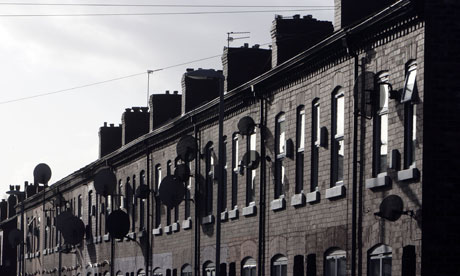
Road, literally
The houses are empty and dull and generally don't look like nice places to live in. The décor in both Eddies, Carol's and Louise's house clashes such as the floor pattern with the settee design and colours. And at the beginning we get to see the outside of the houses. All identical in straight roads, some with graffiti on them etc. I think this image would provide us with a good road backdrop if we were to create a everlasting effect of council estate houses: similar to the image left. So the houses get smaller as the road goes on. All the houses were brick, and looked fairly run down and dull so this is how we would present the houses if we were going to create a backdrop.
All the male characters were suits, shirts, smart trousers, ties and trouser braces; and this was very much the smart look the men were into in the 80's. I had portrayed the men in our version of Road as more scruffy and definitely not wearing suits and ties because they were poor. But this is a debate that will be discussed nearer the time and when we know more and more about our characters real lives. The young women, Louise, Carol and Clare all wear fairly dull colours. Louise wears a tight, black leather jacket (which had been included in my brief ideas of my costume ideas) she wears a tight leather, pencil skirt and white high heels. The outfit is simple but looks classy and looks as though she is going out on the town. Carol wears a black vest top and a dull-ish red pencil skirt. Both outfits look very rock'n'roll/punk to me but they both suit their characters well- slutty but classy with men.
 Joey is, so far, the only exclusion to the tie look but then again he is not mentally well in this scene due to him starving himself so I can only imagine that his appearance is past him now. Clare is also one with the brightest colours with a blue, long jacket and a blue skirt. Again the colours all match as did the all black outfit Louise wore. All the costumes in this series are inspiration however me and Phoebe have already discussed some of our costume ideas (tbc).

Jim Cartwright was brought up on a northern council estate; which can only lead me onto say that it wouldn't surprise me if a lot of the characters we meet on 'Road' are over exaggerated characteurs of people he met or knew when living on the council estate. "So I know what its like to have no money,, Making yourself get out of bed in the morning, the rejections, no work-" This is all the characters in one. Joey is suffering from this, deeply and he sees no point to make the effort to live now that he has no job. And so Joey is Cartwright at times, but then so is Louise, Carol, Eddie and Brink whom are all young and wanting to change the world- but not knowing how to- "somehow a somehow might escape".
In a very interesting interview published online: http://www.theguardian.com/stage/2015/may/04/jim-cartwright-ancient-secret-of-youth-and-the-five-tibetans-little-voice Cartwright talks about his home town and how there used to be large lion statues, in Bolton this is, which he used to ride when little. "It's a shame...its like a symbol of being young and thinking we were going to change the world" this quote could pretty much sum up Road. All the characters we meet are desperate to change the world in some way or another. Louise talks about how 'theres nothing left but profit and loss' and she believes that if 'magic and miracles' occurred and a 'Jesus to come along and change things again' the world would start to become a better place. Brink mentions how he 'wants to be a cowboy' which sounds a bit childish on the subject of changing the world, but he says 'I'm just cattle, herded, helpless' he has a real strong insight to the fact that he and the others have no power to change the world. Like the young Cartwright riding those lions, they had all these amazing fantasies about changing the world and their lives but they were all just 'herded cattle, helpless and waiting' for someone to change it for them ~ 'Somehow a somehow might escape'. The older generations whom feature in Road such as Brenda, Valerie and Jerry all talk about how they 'can't forget the past' and they question why 'can we not have before again?' They want the change which changes the world to what they did know it as, whereas the youngsters want a complete new and fresh change where they can 'be cleaned' and 'sweat or something' and by that last quote from Joey I put 'sweat' in the context of letting out all of this fears and negativity about his life and also to let out why he really is starving himself as I don't think we are let onto the full story.
The whole prospect of changing the world, as I said earlier is almost impossible and they are all aware of this. Which leads them to the possibility of 'escaping' is much more reasonable. So its all good that these characters are listing their fantasies of 'escaping' however Cartwright believes that in the 80's, the time of the play, "Thatcher had a hold of everyone" so escaping nor changing the world was a complete waste of a fantasy- hence the very relevant line of "you can't escape".
As teenagers him and friends went on missions to extend their youths as this was something of a popular command then which is where SkinLad's yogic features appear from.
It seems to me that all of the plays Cartwright has written all have very strong links to his life. For example when he moved away from Bolton and to London instead he shared a flat with "skint Bohemians" which then turned out to be 'Road' itself.

Now at the age of 56, Cartwright has set up weekly acting classes in the less well off places near his home to allow the children of this generation to have a better childhood and to have something in life, an "alternative route for those unable to afford the fees of a regular drama school or dramatics club" He also believes that there is no good reason to make acting for those 'Gorblimey' people by that he means the posh actors and the only ones whom could afford the fees for drama schools- and Road is a perfect example of the breaching away process from the 'gorblimey' acting.

Some song lyrics reminded me of 'Road' and its characters. The song is called Read All About It, by Emeli Sande'. https://www.youtube.com/watch?v=vaAVByGaON0 The song lyrics read: "you've got the words to change a nation but your'e biting your tongue" I feel like this is extremely relevant to the characters on 'Road' however. They all have the power to change the world or escape but they are 'biting their tongues'. Like Clare, she says how she took a 'honey quiz, and got full marks' but she believes that 'she has nowhere to drive this'. The mentality on Road is very negative. People there don't fully believe that they can change or escape so it just doesn't happen and it stays as this impossible fantasy. So these lyrics are summing up all the characters and how they all want something more, a 'change', 'magic and miracles', the 'before' and to be a 'cowboy' but they are all 'biting their tongues', they've spent all their lives in silence and even though there might be glimmers of hope they don't do anything about it.


Returning back to another of Louise' scenes in this clip, her one line being "me shoulder pads slipped". In this clip she isn't reacting to this happening because I have come to the conclusion that the reason her shoulder pad has slipped is because of her brother pushing her up against the wall in the earlier scene. She makes no fuss about this happening which could be because she is a quiet character but its more likely that she doesn't want to mention what happens between her and her brother so she keeps it quiet. The shoulder isn't mentioned again which could mean that she tries to forget the things that her brother says or does to her... This point I found really interesting however I then looked in our version of the script and there are no specific stage directions saying that he pushed her against a wall, so the shoulder slipping isn't directly caused by the brother doing this but it is an interesting point made and it could well be the case of another physical abusive action because Carol mentions that "there's always summat with you" which tells us something like the 'shoulder pad slipping' has happened before...

This clip was extremely helpful and it will continue to be throughout this project. It has already given me some important notes for the two scenes in which Louise features in and it has given me a really clear idea of the two relationships i.e. Carol and her brother. The accent used by Horrocks will massively assist me for my accent as I can take the entire line and how she says them to work on how I say them.
I am really pleased with my find of this useful bit of secondary research, and it will be my own task to continue watching the series and find more helpful hints for our version of Road and my version of Louise.


Thursday's session began with continuing blocking Road. Again, like yesterday's session, I have no scenes until the end of the play so I took it upon me to continue making notes on Road and the scenes blocked in this session:
Displaying IMG_5332.JPG
Script notes 1
This began with a bit of fun dance choreography as Hannah, Kennedy and Donna volunteered to play the short part of the live dance entertainers that go wrong at Bisco's Disco. The sequence is short but very humourus so it acts as a nice bit of comic relief into our play. 
After the dance piece Bisto goes onto a second monologue about it being the last song etc, and I identified that his character, in this monologue, really changes from when we first meet him and before the awful dance. "I love you, we love you, so you love you too, you're worth it, people" is all said softly and slowly which is a massive contrast to how Bisto (played by Luke) opens this very scene. Luke suggested that he softens down the tone and slows the pace because perhaps he loved someone once and wanted those at his disco to be with the people that they lived because perhaps he couldn't do this to the one that he loved. 
       Bisto is an extremely lively character and this, I think, is a front that is put on by him. I think that he is incredibly lonely. And that his disco means the world to him as much as everyone who attends his disco does. The soft tone to which appears in the final section of this scene makes this loneliness more apparent because all he wants is for his disco 'customers' to be happy and to "love theme selves" etc. This is a very interesting contrast that Cartwright has used and its well hidden behind a loud, boisterous, sexual, well-liked Dj. 

Displaying IMG_5333.JPG
Script notes 2
Curt (played by Nyakeh) is a really interesting character; he tells us little about himself which left me guessing. In his monologue (Act Two Page 48) he mentions that he shouldn't be drinking with "what he's on". This is obviously a reference to him being on medication perhaps anti-depressant drugs? He says that 'he doesn't bother now' which makes me think that he has been on this medication a long time and that now he simply isn't bothered if he takes them or not. He goes on to describe, in detail, the smells of the Road. I came to the conclusion that the drugs that he is or was taking either made him very aware to the things that surround him or that he was taking them due to this (I am unsure of which) but it striked me odd that Cartwright has made this character so observant of Road whereas the other characters just live life on Road without a passing thought of what Road is really like. Curt is written to see Road as a very negative place-completely contrasting to other characters such as Scullery who lives and breathes 'his' Road. He, Curt, says how Road is "where things slide to but don't drop off" by this I read it as Road is where all the crap in the world literally and theoretically goes to and stays- 'doesn't drop off'. This includes the bad people as well as the literal sense of rubbish dumped around etc.
A second reasoning to why I have linked Curt with anti-depressant drugs is because at the end of his monologue he gets quite angry with himself; "aw I'm sick of moaning" and he suddenly changes his 'tune' and stops the moaning and finishes on a positive; perhaps this was him taking the advice given to him by a doctor consultant...?

At this point in the session, we were all split up. So the scenes that needed to be blocked would be done in the training studio with Kirsty and the rest of us were taken into another room with Laura to work on our Northern accents.
Displaying IMG_5324.JPG
Accent work
      Laura got us to repeat after the words in the picture (above). For each line she got us to identify the sounds that would be changed in order to create the northern accent. So for example, 'Task, last and dance' we would remove the 'ar' sound and change it i.e. Taarsk to tAsk- so emphasis on the 'a' sound instead. The second line, we changed the 'eugh' sound to a 'ur' sound so 'girl' changes to 'gurl'. The third line was changed to an 'or' sound so it went from 'law' to 'lor' by dragging out the final 'r' sound. Fourth line the 'u' sound changed to an 'o' sound so 'under' became 'onder.' And finally the fifth line, these words are split in half when said in the accent; so 'clear' becomes 'cle' 'ar' you don't take a breath in this split just simply pause momentarily and emphasise the second half of the word.

We then, one by one, had to repeat the two sentences at the top of the board making sure we changed the sounds of the 'werds' we pronounced.
And our final task was to rehearse a couple of lines from Road in the accent. I chose the line "you can't dance with your brother" as this includes three strong words that would be prominent in the accent. The three being 'carn't' to 'can't', 'darnce' to 'dance'. Brother being the final word, which is said with more of a roll of the 'r' sound to change it to 'brewther'.
Matt, being from Middlesborough, has the natural northern accent and he helped me a lot in today's session. He would say one of my lines and I would repeat it. The notes he gave me was that I would say the words to cheerfully whereas they needed to be delivered at a slightly lower pitch, so instead of going up (in pitch) at the end of brother, I need to stay at the same pitch.
The point of this final exercise was to present this line to the class and get feedback but unfortunately I was pulled away to do my final scene with Eddie, Brink and Carol. However, I found this exercise extremely useful! I know have a set line which will act as my line to set into the accent and also have clear instructions set by Matt to watch out for when I say my lines in the accent. I also have the image of the whole exercise process so I will aim to do this daily to really master the art of the northern accent. 


As disappointing as it was to miss the rest of the accent 'class', I got to block my last scene. The scene begins with Eddie entering with an armful of wine, then Brink enters and then Carol and I enter giggling. We identified that Louise, in this scene, acts as Carol's tag-along. But Carol has taken the role of protecting Louise and caring for her because this is perhaps something her mum (Brenda) never did for her.
Carol is very dominant and will never let any man walk over her (which so happens to be both mine and Phoebes 'motto' in life and if we were playing ourselves, we would never let this happen) Carol is very sarcastic and she is very much my humour- "lovely place you got 'ere" "thought it were the Ritz for a second" and poor Eddie is oblivious to this sarcastic remark(s). For the majority of the begining scene Louise sits very quietly and just laughs along to what Carol says and 'splutters her drink' every now and again; which led me to the fact that Louise is actually quite polite. She refuses the offer of Brink's glass due to the fact that he won't have one so she is considerate and even though she doesn't know these two boys she still keeps it up. This is the opposite for Carol and I think she plays this more dominant role in this scene as a way to mark where she stands with boys and one night stands as this scene could end up as.
When Brink and Eddie leave the room we get an insight to what the girls actually think of the boys; Louise seems quite keen but Carol (as expected) is a bit more stubborn but she also continues to mention 'how long it takes them to get a cloth' etc as though speeding them up in this process.
There's one bit of this scene that we all laugh together and although we didn't attempt this in lesson, later that evening (at work) I suddenly had a thought that this was the only time that we have a connection. Us all laughing together represents us being quite close, friends even and enjoying one another's company. This connection doesn't last long but I think it is an immensely important that we have this in our scene because it shines a light on this 'friendship'. Unfortunately we only got half of this scene blocked but I think it's starting to look really good. The stage balance is effective as only Carol gets up and moves, I, Louise stays in the same place the whole time, Eddie and Brink sit close to us but then don't move again until Brink goes in to kiss Carol.
The relationships between the four characters is shown strongly through our version of Road and the two dominant characters (Carol and Eddie) couldn't be less alike and in actual fact its the quiet Brink who goes in 'for the first move' and begins the more loved up ending to the scene.
This scene was really beneficial for me to identify the relationship that me and Carol have; it is clear that I am happy in Carol's company and am perhaps used to her sarcastic and dominant ways. We are close friends and stick with each other but also know where we can have the friendly banter- "I'm saying nowt."

Whilst walking home, I had my headphones in (bear with me!) listening to a Ben Howard song called Promise. The introduction to the song is the sound of rain hitting some sort of tin roofing etc. 

https://m.youtube.com/watch?v=Xjg0Ip7TzzM 

The link above is the song including the introduction. As the song isnt an 80's tune we would stop the song before the music really begins however this introduction, I felt would fit Road well. The rain, to me, sounded like it was hitting glass bottles; this would fit with Road because I can imagine lots of beer bottles left out on the street after the dramatic nights out all the characters seem to have, with the exceptions. The introduction could be played at the beginning of our piece; to expand, I think at the begining would set a very peaceful outlook on Road and then as soon as we begining the audience will be quick to understand that Road is nothing like what they have just heard. The rain closely links with the season in which I think that Road is set in-dismissing the fact that it is set in Northern Britian where it, unsurprisingly, rains alot- I got the inclining of the season one because my imagery imagination brought me to the fact that whenever I picture the scenery that surrounds Road it is dull, both sky and land, so it being stormy, cloudy or rainy is something I have always pictured. Secondly, because the proffessor (played by Joe) mentions "an episode occurred in winter" 'in 1982.' This reference to a season is the only one that features in the dialogue so it has only given me this to pull thoughts from. But linking it with the fact that I can only picture this Road as a dull place with rain or storms the proffessors line fits itself in with this statement perfectly. Which leads me to conclude that this Ben Howard introduction could fit our version of Road well. 

 So to conclude, I really enjoyed this whole week of blocking and even though it included a lot of scenes which I didn't feature in I used this time wisely and I can now say that it was really beneficial for me as I now know more about Road and the characters inside it.


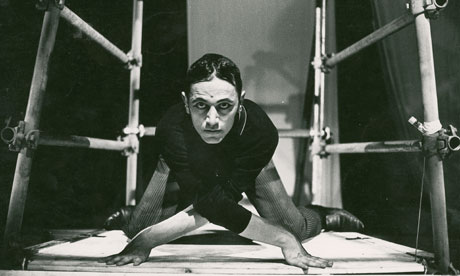
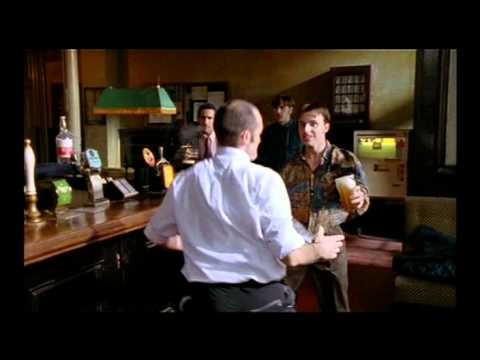


Tuesday, 10 March 2015

Road: (Before) & Week 1

So today we were introduced to our second contemporary theatre play that we hope to perform in April. The play chosen for us is a play called Road by a play-write Jim Cartwright. The play 'explores' the lives of those who live on this 'road' in the working class area of Lancashire. At the time in which the play is set, Margaret Thatcher was in power (80's) and a time of high unemployment. Cartwright first published this play in 1986 and has won many awards. The play is, simply, a huge selection of interconnecting stories and relationships.

Taking a step back a bit, we were first asked to analyse our previous characters in  the play '13' to remind us and to ensure that we wouldn't pick a similar character/s. Rachel was a feisty and dominant character who believed heavily in politics and largely against religion. She was loud and passionate: so from this I knew to have a less outgoing character to also have a character whom had more friends and family that surround them. I knew that I couldn't go for a much quieter character than Rachel because in some cases I could end up playing myself. I also wanted someone less politically drawn and perhaps more religious based to have a real contrast in characters.

Our first task related to Road was almost like an auditioning process. We were all given a character and a page or so of text and a partner. We, mainly individually, had to create a short scene (movements or just a chair, an accent, attempt to understand that character etc)
With that said we went on to read the play allowing us to understand the story and meet all the characters as we went... I was given the character named Valerie for this exercise. I had to perform this short piece of text as Valerie- or as well as I could from the ideas the text had given me about this character. I portrayed her as a chavvy women in her mid-forties and she mentions having children and a husband. The husband treats her badly and gives little money for her to feed the children. As this activity was short I created the scene with just me sat on a chair- which represented Valerie owning little. In the text she comes across as a food-deprived character and she talks about how she looks and her feelings about her appearance. I recited this text with me sat in the chair smoking. Simple but effective as I felt it represented my interpretation of Valerie perfectly!
I enjoyed playing Valerie because although she is similar to a character I have previously played she was one character who really expressed her feelings-others in Road don't do this as much (or in the style of a monologue.) She just sits and tells the world and the audience her problems and I think in that era- doing something so honest and talking honestly about your life and the Road was brave- especially as Skullery and other characters appear extremely proud of their Road. I know that I could do something interesting with Valerie but I really want to try a character that I haven't played before.
Even though I am still not set on a character despite the fact that I was able to see others play these different characters which briefly introduced them all to me- I have yet to settle on a character in which I am drawn to.

A few weeks later we did a proper introduction to Road; a read through.
My very first thought of Road was that it reminded me of The Royle Family (a comedic television programme). The accents in Road mainly made me link the two: The Royle Family is set in Manchester so the accents are Northern, witty and rude. And the few pages into Road that we were made me think of the similar accents. The accents are very strong and all the text is written in the accent-so I can already tell this will be something of an aim for me because accents are a weak point for me. Another immediate acknowledgement of Road was that it was comedic. There are many rude elements to it and other dark moments but majority of those rude sections are written in a humourus way-which of course appeals to the age range which the cast majorities (16-17). The play, to me, is fairly patchy to begin with and it doesn't always make much sense but as we read on I began to understand it more but I still haven't formed an opinion on it as I want to re-read it to really analyse the storyline. At this stage I am thoroughly looking forward to getting stuck into Road and the casting day because this entire play is different to what we performed together back in October- so I look forward to how we all come together and hopefully put on a great show.

Following up from this read through we had a session of discussion all about Road. We had to write words/themes/ideas that sprung to mind that related to Road, on the board, and this is what we came up with: We did a similar session with Deborah so I am combining both sessions information
Displaying IMG_5205.JPG
Road, themes and other 
The main and probably the most re-occurring theme is sex. Prostitution is mentioned with some of the female characters as well. But sex back then (80's) wasnt passionate or hugely heartfelt- it was more of a way to get (females mostly) at they wanted. It wasnt a private matter either- as it was kept silent in the years before the 80's. At first glance the women in the play are portrayed as slutty and unintelligent but looking into it more they come across more intelligent when looking 'behind' the language. They have control over who walks over them and they're not easy to 'pull' as such-Carol is a perfect representative for this as in the final scene she makes it very hard for Brink and Eddie to lay hands on her whereas Louise is a lot easier. Some said, in our class discussion, that Road was written from a very male perspective of women- which in some ways is true seeing that the author is a male; but the women are definitely mis-interpreted: they are clever and as said above they use sex as a means of getting what they want.

Mental health/ issues/disorders was another theme mentioned. A lot of the characters are deprived of things we take for granted now; such as education. Education is something never mentioned apart from the Professor who's previous occupation was coincidentally a professor. And not much about the future is mentioned either which leaves that open for our interpretation when it comes to our individual character profiles. Returning to the mental issues Joey and Claire deprive themselves of food which leads to Claires death. Their method was being locked in a room, in bed and not eating nor drinking; their method is a lot more of a protest. Whereas if people were to do that nowadays they would simply just not eat... Perhaps it wouldn't be so 'dramaticised'? But then again it would be treated as a lot more serious than it is in Road.

Alcohol. Road is fuelled by alcohol. The pub is the main place to be and to drink! Perhaps they all drink to solve the problems and issues of Road? Skullery acts as the audiences tour guide and even he is drunk by the end of the play: This tells us a lot about Road, the characters and the time-era...

Poverty is another running theme. The characters have little possessions. Skullery appears to have no friends or family- or are the audience his friends...? He is lonely and poor. And many of the other characters are also.

The 80's were free of rules and freedom was admist. There was, still, rivalries, fights, rights and violence. The time of Margaret Thatcher in power. Male and female arguments occur in Road also such as between Marion and Brian and family arguments between a mother and daughter.  Which leads me onto talk about relationships during Road:

The relationships contain a lot of emotion especially between Marion and Brian. The relationships, at them moment, are unclear at the moment purely because I haven't had the chance to re-read into each of the characters and whom they relate with etc etc.

And finally music is also a key element to Road- various 80's tunes are blarred out in nearly every scene. Music is a great way for forgetting- so perhaps the characters listen to a lot of music, again, to forget the real issues in Road. But on the other hand Road doesn't sleep- it is always alive and there is always a lot happening. This is relevant in the interval which theoretically isn't an interval- the play continues and the audience come and go.

So to conclude: Road, at the moment, is coming across as a really interesting play- personally. I think it will be challenging in all aspects but I can already start to see different ways of doing scenes/characters etc and I am really looking forward to it.


So, the following week we did some practical improvisation on Road. In pairs, in front of the class, we were given a line from Road and had to create a fully improvised piece. Me and Hannah nominated ourselves (more like Hannah nominated me!) And we were given a starting line (a line from Road). Our piece was all about why I wouldn't go out (out to the pub etc). The scene was started with some force and the tension was kept up throughout the whole piece. Improvisation is something I find quite hard but I think we did really really well and performed a well told story between these two random characters. I think this was mainly due to the fact that me and Hannah are close friends; that we could easily bounce off one another's ideas- whereas if we didn't know as much about each other then the scene mightn't been stilted with ideas etc.
I enjoyed this activity and especially watching everyone else's improv. Although it didn't relate to Road much (apart from the starting or ending line) it was really interesting to see how it could fit into Road well and match one or more of the storylines that feature in the play.
After this session we were set the task of listening to our road. We had to listen to and observe the sounds we could hear firstly in our bed rooms, then our house and then our road at different times of the day. This task was really interesting because, living on a busy road, I could really notice the differences in the noises at different times of the day. For example Saturday night (11.00pm) was busy- the cars were driving past frequently. And then 7.00am Sunday morning there wasnt a car to be heard.

But the lead on from this exercise was in our Mondays session (p.s also happens to be the day of casting!) We formed a line and one by one had to read a section of our 'road diaries'. Then we spoke them two at a time; forming a overlapping and a jumble of words-but we were still able to understand what they were both saying. Then we had to choose three noises, that we identified in our rooms, houses or on our roads, and make these noises. I chose the ticking of an alarm clock, an iMessage tone and a lawn mower- all being sounds I had noted that I heard in my house. Still in the line format, we all started making our first noise; mine being the clock ticking. We had to keep the noise level to a real minimum. We slowly had to increase the noise volume, again and again until it was above shouting level. We had to drop straight into making our second noise silently and so on for the third noise.
When we were introduced to what we were going to be doing I felt apprehensive about it purely because I wasnt sure how well it would sound as the finish project. When doing it; it felt too much. The noise level was high and it was impossible to pick out any particular noise so my brain was overloaded with thoughts and sounds. When we listened to it back however, it was much easier to pick out specific sounds. Although it still made me feel uncomfortable- too much going on and too hectic for my liking- I could clearly see/hear how well it had formed and also how well it all sounded. The sudden silences worked the best purely because as the noise level rises you start to identify that its too much and then it drops completely. The silences were refreshing! In the quiet sections it was much much easier to identify and pick out specific sounds and even notice the slow rumbles of the motorbike noise etc. The loud parts drowned out the peaceful noises of the birds tweeting but what would've been effective is if we had risen the volume of the birds and dimmed down the other noises and this is the case for other noises being made.
This exercise was really interesting as it is nothing like I've done before. It felt almost Berkhovian but nowhere as near as grotesque so it really was a new experience for me; and an experience that I know to use in the future because that hectciness of overlapping day-to-day noises created such an atmosphere and told such a story that it turned out to be really powerful to listen to.

So after this we were casted... I am casted as a character named Louise. Louise is nearly always with Carol, a close friend of hers, and from what I can see, they are up to no good; messing both Brink and Eddie around at the end. Louise is the character I asked for because, although I know little about her, she intrigued me because she appears as a tag along to Carol in the final scene: it made me wonder why this is, if there is a reason or not? I am really pleased with Louise and I hope I can make her a unique character in Road.
I want to make her different to me although I understand she is really quite similar to me any ways. From what I gather she is quiet and a bit of a tag-along to her loud friend Carol. I said above how I felt she was a tag along and I knew that I wanted to look into why this was and talking to you from the day after the performance (15th May) I feel as though I now really understand why she is the so called tag along to Carol and I also now wouldn't class her as this. She sticks closely too Carol because she has noone else, but she is sort of using Carol as a protector. So is it Carol using Louise or Louise using Carol?
Louise, once, appears alongside her brother played by Jake. I am pleased with this pair casting because I know I work well with Jake and we are good friends which will help smooth the creepy scene which is between only me and him for the opening scene.
Louise mostly appears with her best friend Carol who will be played by Phoebe I am really pleased with working alongside Phoebe because she is a brilliant actor, she is really easy to work alongside and we often bounce off each others ideas (so we work well together.)

In my final scene I am acting alongside Lewis, Phoebe and Milo. Me and Lewis have acted alongside each other many times before (school shows/GCSE Drama etc) so I know I work well with Lewis and I know how he acts and vice versa.
Milo is someone I've not yet acted properly with yet; so I am yet to discover how he acts i.e. teamwork/pair work etc. I know we will work well together because I'd like to think that I am accepting of everyones ideas and suggestions and that I hope I am good to work with. This final scene is basically Louise and Carol being brought back to Eddie's and Brink's apartment for sex (in the boys and Louise's case particulaly) so this scene is quite close between the girls and boys. I am willing to accept that this scene is purely acting and I hope that this applies for the others in the scene and that make it casual like our characters and not awkward because "Issie is kissing Milo" etc etc. I am also willing to take on this new challenge for me in my acting experience.


Displaying IMG_5309.JPG
My set design for Road
On our Wednesday session we came in prepared with our ideas for the set/layout of Road. My layout is above. This design is for the housing scene(s). The sofa and chair is to be clashing 70's/80's patterns. An ironing board with clothes piled up. A washing line hung from one side of the stage to another- all with dull and dirty clothes on it. The audience either in the round or on either side of the stage. And finally a Road sign that stays on stage the whole time.
My design is simple but I feel this is effective because the characters in Road aren't they don't have the latest designer home items-far from it really. The clashing of patterns represents the era in which the play is set in (1980's.) The washing line is compulsory in my design but for me it will immediately show the audience what sort of living conditions that this area is living in.
My idea didn't live up to the standards of others design for Road however.

Displaying IMG_5310.JPG
More set designs
Luke's design was for the audience to be in the round. Each different scene would be set in different places around the stage. This idea is strong because it will give off the impression of being on a journey.

Hannah's idea was having the scenes set in a snake like structure. This forms the representation of repetitiveness (a circle). The stage would have various household objects around the snake structure also.


Matt's suggestion was to use all the rooms in the drama department. So the main stage would be where the household scenes are held (excluding Joeys scene) The training studio would be the pub and a room leading off of the training studio would be set out to look like Joeys bedroom as a lot of the play features in this room. This is one of my favourite ideas purely because its a style of theatre that I've never taken part in nor seen before.

Half way through our design discussions the idea of having the audience go around the 'tour' of Road in sets of 10- I suppose this is so it's not overly crowded. So when the first group are done they will go sit in the 'pub' and we will provide refreshments-soft drinks etc. To me this is a really fun idea and it's diving us version of Road straight in with the audience interaction take on theatre- which to me is so fascinating!!

Frankie suggested having dim lighting to match the dull aspects everyone has mentioned for their sets.

We had the idea for which the audience would walk through the ruined engineer car park (the wrecks of cars etc) so they enter from outside, and then in through the fire exits. But, returning to the room scene layout, we were faced with the hurdle of those whom are playing two characters- how can they be in two rooms at once etc?

Joe's idea was that the staging would be in the structure of thrust like a never ending road. Two characters in the play relate Road to a 'pigs trough' which is how Joe settled on the thrust staging. I, again, really like this idea because it is simply showing that this play is set on a road.
Joe's second idea was to have every scene on stage the whole time- so noone and nothing leaves the stage.

Franks suggestion was the stage would be set in the round. Household objects, again, would feature on stage and the strong smell of alcohol would be apparent as well as muffled music and dogs barking so eventually it seeps into your subconscious.

Milos idea was to set it into four separate sections of the stage. One being a construction site- "bulldozer wheel" is mentioned which links it to a abandoned construction site. Another section being the pub, the third houses and a wall which would be the seating for the audience.

The others are best described through my drawings however: Sophie's idea was to simply have our Road set out in a simply, stereotypical road layout.

Lewis' was my favourite idea. He suggested using the whole drama department to perform Road. The dance rooms would act as two/three housing scenes (so decorated as three different scenes in one room.) Room 341 (end room) would be the chip shop as this is a scene setting used a lot in Road- here could be where refreshments are served...? The training studio would become the pub setting and the final room would be decorated as Joeys bedroom. I really, really like the idea of setting our Road around the different rooms however I can see many downfalls to this idea. Firstly we have the herdle of those whom play one or more characters. And also, if we expect a large audience then not all of them will be shown around at the same time and also a lot of audience members won't be capable of standing for the whole performance which is something we all want to take into consideration in order for all of our friends and family to attend.

Displaying IMG_5312.JPG
Set design 3

Displaying IMG_5311.JPG
Set design 2


Nyakeh's proved similar to Lewis' idea however
 some scenes would be performed 'behind closed doors'. By this he meant that some scenes would be pre-scenes and the audience would only get to see brief clips of these scenes from an outsiders view. This will leave any pre-conceived ideas about specific characters open for the audiences interpretations.

Jake's explains itself in the image, right, above.
And finally Pheobe's was for the road sign to be the main focus point of our performance. The stage to be the main setting and the use of both entrances to the theatre.

It was really interesting to get an understanding of everyone's individual ideas and designs for Road as they were all fairly different; until we began discussing and ripping apart different ideas. We have a fair bit of knowledge to how Deborah wishes to create Road and to me- they all sound extremely intriguing so I am genuinely looking forward to getting stuck into it.
All the set designs suggested today all appeal to me and they are all very intriguing! Lewis' has to be one of my favourite layouts. However all the ideas are really good and I think, if we can, we should include an aspect of everyone's design to fit all needs etc.

Today we were set the aim of 'selling' road. I was in a group with Nyakeh, Lewis and Nathan and our stimulus was both selling Road to the audience; as though it was the best place to go to!  Our second stimulus was the notes we had made about Road itself.
We created a short piece that told everything positive about Road- we played our own characters and did a vlogging style (video logging) as though we were filming our individual opinions of Road. As my character, Louise, I knew to mention going out to the pub and meeting all the boys because this is all Louise is known for in Road. Lewis playing his character mentioned the 'birds' of Road that you could meet. Nyakeh did the same. And Nathan didn't say a lot but moved around-energetically like his character. 
This little activity really allowed us to delve into our characters and what they think of their Road. This gave me a clear insight that the people of Road are proud of where they live so this activity proved very beneficial to us; it also proved as a good introduction to Road itself.

Thursday we jumped straight in with practical activities to again, introduce us to Road. We first focussed/discussed characters and people statuses. For this activity in groups we had a selection of images of celebrities and had to put them in order of status-purely on the basis of what the image told us and not who the people in the image actually were! 
Some images such as Dot from Eastenders were put at the bottom of the status level: she wore a long 'tramp' coat and her face looked drooped and exhausted. Her back was slightly hunched with her hands neatly placed in front of her stomach. She was put at the end for all the reasons above. 
We had an image of Matt Smith who wore a dull tweed jacket and bow tie. We placed this image in the middle of our status ladder because although this guy in the image looked smart he didn't look as presentable as David Beckham did in another image we were given. 
We were given about 9 different images and an image we placed at the top was a picture of Superman. We chose this to be at the top due to his stature. His arms resting on his hips and chest out 'puffed'.  This image beat all the other images because he portrayed the whole representation of being of a high status. 

This activity sparked a lot of disagreements in the group: these disagreements would revolve purely around who thought where each image should be in level of status. It, also, became obvious that we all had very different interpretations of these status levels and also how some people found it very difficult to see these people in the images as just people and not the celebrities they are well-known for. 

We then did a second status activity: four people stood out as observers and the rest of us were all given a number. This number would represent our level of status (number 1 being the lowest and 12 the highest.) The four whom observed had to watch how we all moved and acted and had to select and guess what number status we were and then put us in order.  This exercise allowed us to embody the status in which we were representing. I can see how it was difficult for the observers to identify what statuses we all were because for example number 3 and 4 were represented quite similarly.

Continuing our practical work our second activity was: we were all given an animal and had to briefly described the human like physicality that this animal would have if it were to become a human. My animal was a hippo and I decided that if this were to be a person then it would walk heavy footed and lead with its nose- like the qualities of a hippo. We then had to move as these human/hippo characters. This exercise is there to remind us that animal influences can assist us when bringing our characters to life in Road. For example Louise is a quiet but confident character. She could then be linked to an animal that represents these characteristics (look in character study/profile.)

And finally, our last activity for todays session was: we were in pairs and one of us was given an emotion in which we would have to represent to our partner (in silence and only with movements, facial expression and body language.) This exercise proved really, really difficult. It was really hard to identify the emotion Hannah was trying to show and vice versa. Which shows that we, both me, Hannah and others in our class, need to work on how we specify emotions and express these through body language, facial expressions etc etc. A lot of times we could look at everyone (everyone was portraying the same emotion) and then use them to gather more 'information' to what this emotion could be such as frustrated, guilty.
All of these exercises done today were to assist us further into our introduction to Road. The status and animals will help us apply those learnt today to our character(s) and Road itself.

Displaying IMG_5370.JPG
Road houses?
Added in, three weeks on from this blog post week:
When sat at the bus stop I came to properly notice this house in my local area. It is situated on a very busy road (the main road to reach Waterlooville) and it is a house that I have known off all my life due to once living in the road opposite and now for it to be where my bus drives past everyday to college. But today I actually looked at it. Noone is ever seen to be living here, despite the light that's on in the image that I took (This image was taken from across the road, and zoomed in so the privacy level was not forgotten!). But, when I looked at it, it reminded me of how I first had imagined Valerie's house, the very first day that we were introduced to Road.
The paint work is rotting, the front gate rusty, and ivy swallowing the right side of the house and the windows looking like they had seen much better days. Which leads me to say that the owner of this house is either quite elderly or poor due to the house looking as derelict as it is. The house is surrounded by some really lovely, and well-kept together houses so it's not due to the area in which I live in or anything. When really thinking about this house, I could begin to relate it to how I had pictured the living room in which I set Valeries monologue in.
- The patterns in the room clashing, and the colours considerably faded
- Mould begining to appear in the high corners of the ceilings
- Mess and untidiness surrounding each room
- Unclean plates/dishes/cutlery left out in the kitchen
- Empty cups and plates again in the living room.
All of these images I had created with my imagination, later helped me to conjure up the exact image I wanted our Road to look like (see above.)


Wednesday, 25 February 2015

Devising Week 7

The performance week!

Again today we were a member down but worked on all scenes that could on the day be easily performed with just the four of us excluding Nyakeh.

This morning we began from the beginning of our piece and worked on incorporating more physicalised elements into each section: starting with the opening 'diagonal' scene which involves all four/five of us. Originally we had created a simple piece in which Frank walks past us all in the line and reacts subtly to each client/patient but my suggestion was to change up the way in which he reacted or change the way we approach Dr Joe- I didn't want it to be repetitive nor uninteresting so we created a more physical outlook. As Frank reaches Matt, Matt grabs him and holds him tight to his chest to show Matt's nervousness around strangers and his behaviour issue. As Frank reaches me I wave him over with the picture frame in hand and do the same as he moves on to Hannah. When Frank has completed the line Hannah says "Good bye Dr Joe" and raises her hand. It was then her idea to cannon this and all over enthusiastically wave good bye to Dr Joe, and then in cannon effect lower our hands. We got Frank to watch this from the audiences perspective and his feedback was really positive and that the wave looked child like which captured my character perfectly! 
Displaying IMG_5139.JPG
Franks 'drinking out the flask' movement diagram. 
I then suggested instead of finishing the scene here we continued it with another physical theatre element to it- I suggested that Frank could bounce off us almost like a teacup ride at a funfair. The motion of the ride is that the teacup continues in the same direction but spins whilst doing so. I wanted Frank to spin off each of the three of us as though he is juggling his thoughts and problems with all of our problems that he has to deal with- this will imply that he has a lot more on his mind due to his depression. Now this scene has become more physical it makes it more interesting to watch, we tried this scene with all the new physical movements and dialogue and it seemed to work really well together. Frank, again, sat in the audience seating to see from their perspective the scene and he said that the stage balancing of each of our positioning was really effective. His only comment was for me to be more like a CBB presenter: over enthusiastic about everything and over dramatasise the wave I do. As Frank reaches me I do a large wave with the picture frame in my hand to embody the CBB presenter type characteristics.

Returning to the diagonal line physical piece: me and Frank created a spin tug of war then when we get nearer Matt we use the tug of war styled movement over the picture frame. For Matt's physicalised piece he pushes Frank off of him (in case he has a 'wire' that's recording him...) The fall to the ground was originally more like an action movie roll which I thought gave off the wrong impression so I suggested that as Frank rolls up his back into a standing position he is drinking out of the hip flask he owns. So he goes from crouched down and then as he reaches standing position he is already drinking out of his flask and then he bends his back backwards to take a more dramatic approach to drinking out of a flask. This now looks really intriguing as the audience are immediately told this guy has a drinking issue but they want to see where it will take the piece and what it will effect etc. The slower Frank does this means that the audience can really read into the motions and the tentativeness of the section. 

We went straight into the triangle interview scene and added in a repetition of our last words 5 times which now helps to build the noise level and atmosphere and as said before when it reaches its loudest point Frank stops us with the quiet noise of the dictaphone and although the noise level drops the atmosphere is still really really tense and we barely give the audience time to take it in as Frank begins his piece. And this is exactly how we have all conjured up Dr Joe's thought process and brain at this time- he has too much to think about and too much to concentrate on. The repetition of the last words was my suggestion purely because- we repeat our last sentence 3 times and this just didn't seem to build the atmosphere I was so hoping we would so adding in more repetition allows us to do so and also allows the audience feel it. 
       This repetition of words etc has really been influenced from the Berkohivan style that we have aimed for in this entire devising project. We wanted a mixture of Frantic Assembly and Dv8 (Two almost-dance-like Physical Theatre companies) and Berkoff. This repetition is something Berkoff uses a lot in his pieces and he uses noise volume to again create the perfect atmosphere. Us repeating the last word is unusual in the naturalistic theatre world and Berkoff does exactly this- to move as far from being naturalistic as possible. 

Our next section which needed work was to add Matt into the OCD questioning scene which ends with us all fighting over having Franks attention. Originally both Matt and Nyakeh were going to have two separate interview scenes but this made us slide into a more boring scene with little physical pieces, So including him into this scene not only allowed us to give Matt an OCD interview session but it also added to the hecticness of the piece with each of us overlapping each other and fighting over Frank- which adds to Frank's depression. This section was quite simple as we had the layout and the structure of the questioning already set out all we had to do was ensure that we asked relevant questions to Matt about his obsession. I am really pleased with this piece purely because it took us the short amount of time that it did which meant we can pull off good work under the pressure of having one less member: a member who has become quite dominant.  

The mannequin scene: the whole idea of the mannequin representing Frank and I getting married is really really strong and I can see how well it works and how well it fits etc however I find it incredibly difficult to act to this non-reacting, human-shaped object. I really do like the scene but I have to force myself to pull out all the stops to follow through. And by that I mean I get to some points in the scene that perhaps I don't put all my effort into making look really realistic and perhaps forget to take the movements with the shirt sleeve slowly to represent being in love- and this is just me being honest with myself and something I know I will need to work on before Thursdays performance otherwise the message will be wrong for the audience and it could so easily become comedic. My personal homework/research I set myself is to re-watch the Enter Achilles Dv8 scene and pay close attention to how the man moves the blow-up doll and the pace in which he does so and also how he looks at it etc. This scene is our influence for the mannequin so this means I can take all notes I make from this and use it into my scene. 
Another suggestion of Hannah's was for her to be Dr Joe's wife so it becomes a split scene between me and the mannequin & Hannah and Frank. All the movements were in sync with both sides of the stage for example when the mannequin/Frank puts his hand on our left shoulder at the same time so from the audiences view we all move at the same time because we are playing just three different characters. This worked really well- and it also made me feel less awkward acting with the mannequin because the audiences full attention wasn't just on me. But at the same time this is a negative because the mannequin is a strong 'figure' in our piece and my characters obsession is taken to the next level which needs to be seen by the audience so at the moment I am torn between keeping it as just me on stage or to have Frank and Hannah. However I'm thinking it shouldn't include Hannah at all because from the audiences view it makes Hannah look like she is playing my character-which makes the entire scene unclear. 

Displaying IMG_5141.PNG
Photo taken during our rehearsal performance
In the middle of all this devising work we performed our pieces to the class including Deborah and Kirsty and got some really good feedback. We only showed, again, the short pieces we'd worked on without Nyakeh but this was still really difficult to perform and get feedback on such a small piece without an important member of our group. So this performance, for me, was really daunting. 
Displaying IMG_5142.PNGI gave feedback to the other groups:  To the left is the feedback I gave to the 'Family group' which consisted of Lewis, Pheobe, Luke, Joe, Donna and Kennedy. Their piece is really strong and powerful. It is a very clear mixture of Berkoff and Dv8 and the choreography is fantastic. Part of me thought whilst watching it that my group still has a lot to work on to even get close to their level of brilliance and another part of me was that we have got to push ourselves and beat them because a bit of competition could really help and give us the motivation we need. The feedback I gave them was all construction criticism and only things that they should improve on: because at this stage I think that telling them the points that I thought were good isn't going to help them improve.
Displaying IMG_5143.PNG

The second group is the 'Game Show group' which consists of Sophie, Frankie, Nathan, Brandon, Jake and Milo. Their piece, again, is very Berkohvian and they have taken a very dark route. Their piece is at a really strong level but there were some points that the improvised talking was involved that I felt were not necessary such as swearing and Brandon's hosting speeches. Their piece has really really improved because only three/four weeks ago their piece was unclear and had really breached away from the stimulus and physical theatre was at the bare minimum. But they have really taken on board the changes and feedback they got and have now, a very interesting piece. I gave them comments that involved them only improving on their piece, like group one.

The feedback we got was minimum despite asking for only comments to improve our piece because we are at the stage that we have a very short and messy performance with one less member than expected. 
  • "The first scenes physical elements were lovely"
  • "Frank don't have your back to the audience in the interviewing scene"
  • "All characterisation for all the characters were lovely"
  • "The beginning was fab- but make the movements more precise"
  • "Humming was nice"
  • "Characterisation was 'divine'"
  • "Split scene really worked and the use of the mannequin was amazing"
The feedback above was from our peers/friends. The feedback was all very positive but as a group we were in desperate need of things that we should improve on. 
Whilst performing we got a lot of laughs during the mannequin scene... This put me off whilst performing and hugely knocked my confidence. I find this scene really difficult and the reaction we got blew it for me. I now understand that they were only laughing because they know me and not my character and I can see why now but as friends I would expect them to be mature and understand that this is a character and not Issie and not laugh even if they do find it comedic? For me this really did put a downer on the piece that we had even though we did have good feedback. 

On the bright side both Kirsty and Deborah gave us some really good feedback and plenty of things to improve on which is exactly what we wanted/needed. Joined together their feedback was: 
  • To start our entire piece with a more serious tone to avoid making the mannequin scene come across remotely comedic
  • Issie- sharper movements with the picture frame in the triangle scene
  • The skip-hoping, stepping on the cracks, scene was unclear
  • Frank- to project when facing the back
  • More physicalisation and spacing
  • Frank and Hannah being in the mannequin scene was unclear
^^ This feedback was incredibly resourceful as once Kirsty and Deborah had taken us through the feedback they were giving us we had a good long afternoon session to work purely on all the feedback we had been given from everyone. This afternoon session was really useful and talking from looking back onto today's work we managed to target all the feedback and change it to fit the relevant comments.


Tuesday we were back to a full group today with Nyakeh turning up!!
So our first job was to incorporate him into all the short scenes that we would be involved in. This began with the diagonal scene that opens the piece. We also made all our movements more precise in this scene- following the feedback we got yesterday.
Me and Hannah breifly worked on our 'stepping on the cracks' scene to make this clearer. We did this by taking two steps, pausing, looking left then right and then stepping another two steps to reach Frank. The pauses meant that the audience had time to see and understand what we are doing and it also made it look more like we were taking in the pavement and choosing carefully where we could tread without stepping on the cracks. Matt and Nyakeh worked on a short sequence that portrayed the OCD of germs.
We then worked the interview scene with Nyakeh involved: and again as we had more characters to 'fight over' Frank the atmosphere picked up a level.
We decided to rid both Frank and Hannah being a part of the mannequin scene: with in mind Deborah offering to help me devise a short sequence with the mannequin tomorrow. I think scrapping the two of them is for the better of this scene because as I previously mentioned the mannequin is a strong point in our piece and it being just me and the mannequin on stage will really bring this home to the audience.
We created an ending to our OCD section with us all knocking off stage to enter stage (like knocking to enter an office) Frank being already on stage is torn between which 'door' to go to first and again this represents his mind being manic and overloaded. We all enter, in neutral, and walk towards Frank almost like ganging up on him. A fair few weeks ago we created some freeze frames (mentioned in earlier blog posts), so we have rectified these and used them to end each act/section. And to me this is a really strong way to end each section. I am also pleased we managed to use the freeze frames because they do look really effective and give off the right message.
We rectified all the dance pieces that Hannah, Matt and Nyakeh had created back when we were working on the love triangle pieces. We refined all the existing work and thankfully we didn't have to add anything to the relationships section! Whilst they were doing this me and Frank worked on a short scene which revealed mine and Franks relationship. Frank suggested that I just circle him sat on the chair and this is how the scene starts and ends- this purely mixes up just sat on chairs and there was no real reasoning behind this. This scene, as suggested by Kirsty and Deborah, should be more tense and confrontational to put a spin on my character and this relationship with Dr Joe. As this scene ends and Frank goes to leave the others all enter and we again gang up on Frank to form the second freeze frame. I loved doing this scene as it starts to open my character a bit more than just me playing a overly obsessed person. And this was another scene that we both created and developed in a short amount of time which gave us more time to focus on the larger scenes that included more physical aspects.

We then created a scene which would be section 3, secrets. I have to admit the dialogue and content of this scene isn't as strong as the others but the physical theatre aspect over run it. Matt created a wide and spread-out chair layout (we are all sat in the furthest corners of the stage with just Frank in the center) We then improvised with some questions and then as soon as Matt (the last to answer) says his final answer the three of them (or two) drag their chairs to join Frank center stage. They all then stand in neutral.
I then slowly and drawn out, drag my chair and slam it down next to Frank. This scene is quite tense and fully shows the audience my characters real feelings- the deep and meaningful ones. Me and Frank improvised a short dialogue piece and then brought in the physical theatre sequence we created a few weeks ago. Back then the meaning of it was that Frank didn't want me to leave, so we did a full role-reversal so it meant that I didn't want Frank to go.
     Nyakeh suggested just as Frank was about to exit I run after him and start to shout at him, slowly (as though my words were pushing Frank towards the bridge- made from chairs that were pulled together earlier on in the scene.) Frank reverses onto the chairs and I stand behind him. We, as a collaborative, begin to chant "JUMP, JUMP" I push Frank off of the chairs (off of the bridge)
The end... I am so so pleased with this ending scene because the tension has risen slowly throughout the piece and finally my character explodes as does Franks-his in a different way-suicide. This will, hopefully, leave the audience stunned because the ending isn't something that you expect from a therapist- someone who spends all their time helping and thinking of others.

Today was one of the best days of devising purely because we managed to get so much done- and by this I mean we created pieces that we are all proud of and they fit with the sections and our characters and we know we are definitely going to use them so they have been developed and refined all in one day. And we also had a full group which hasn't happened for a long time now and even though he had to leave early and the news was broken to us that he can't attend the evening performance this Thursday we still knuckled down and got a lot of good work done.

The skills I have developed during this devising project is firstly working as a team- a irrelevant one but something I have definitely gained a lot of experience in now seeing as we have had plenty of changes to our idea and group in itself.
My devising and imaginative skills in general have definitely developed. In my very first blog post I mention how I previously did a devising piece at school and as a group we really struggled with settling on an idea and bringing it to life so I was apprehensive about this project but as time went on I found myself suggesting different both physical and content ideas that have been used. Some were little and subtle things such as stamping our feet to enter the interview scene and other larger ideas such as the content of mine and Franks scene in which I circle him- and compared to the devising project I took part in at school I feel that these skills of mine have greatly developed in the physical theatre sessions we have been taking part in since January.

As an individual I have been influenced by a range of different practitioners throughout this project however the main ones are Berkoff, Frantic Assembly and Dv8. Berkoff has given me the ideas for a more sound scape effect to some group scenes which involve more dialogue than physical. The repetition of words and sentences have all been things that I have suggested to bring Berkoff into our piece more. Berkhovian is definitely a favourite style of mine and even though we could fully include this style because our piece wasn't made for the grotesqueness that he uses: I/we have incorporated influences of his style. Frantic and Dv8 are the Physical Theatre 'practitioners' that our piece mainly revolves around. The scenes that involve a more dance based sequence such as mine and Franks sequence nearing the end of our performance has been influence by Frantic Assembly's devising method- they used this concept of stopping one person leaving the room and this is exactly how we created our piece. Dv8 gave us the sharper dance like movements that Nyakeh and Matt have created but also the stepping on the cracks scene both me and Hannah worked on together. Dv8 also gave me the mannequin idea and movements.

Creating my character was heavily influenced from the researching OCD and watching the videos linked to this disorder. They gave me an insight into what goes through someone with OCD's mind and how "i must wash my hands" keeps repeating in their minds. The Enter Achilles clip heavily influenced me with the mannequin purely because they have a very similar scene with a blow-up doll. 

Saturday, 21 February 2015

Character profile

My characters name is Alice Coles. She is 26 and born on the 7th of February 1989.
Her occupation is a simply office job, filing papers to folders. The hours are inconsistent and she rarely shows up to work as she would much rather spend time at Dr Joes office.
She has been in a long term relationship with her boyfriend for 6 years now and they own a dog together and no children or sign of marriage.

Less than a year ago, Alice began visiting Dr Joe therapist sessions due to an abusive relationship with her boyfriend. The boyfriend would often threaten Alice and physically abuse her. She had a nice selection of friends who persuaded her to go and see someone about her relationship issues and with much persuading she did. Dr Joe really helped her and as Alice began to open up more and see Dr Joe more the affair happened. Dr Joe is married which meant the affair was always kept a secret and was kept in the confines of the office. Alice had brushed off the abusive boyfriend so she is single and really into Billy (Dr Joe). Billy played by Frank, begins to realise where this is going because each time they had their 'session' Alice became more and more obsessive over how her and Dr Joe should make it official, and that she really did love him, and why they couldn't ever meet up outside of his work etc etc. 
Things then began to get overly obsessive. Alice has become more of a character whom fell in love but now that Dr Joe doesn't take much notice of her she feels the need to try even harder. This obsessiveness lead to Alice loosing out on normal social life with her friends so now she still has people to talk to but noone really close to her as a friend; apart from Dr Joe of course!

Alices home life was fairly normal, however her nan had serious OCD and this rubbed off on her mum and then onto her- as OCD is often a genetic problem. But her OCD wasn't obvious until the obsessivness with Dr Joe appeared. Her mum worked in a pre-school and her dad a car salesmen which meant her family had a good wage to live off of. Her house, and nice three bedroom and decently sized. Alice was an only child with no pets to grow up with just her imagination.
She was a very imaginative child who was always happy to be sat alone playing and amusing herself-she wasn't always that sociable but she adored her dad. (More fond of the male side of her family)
     Home and childhood environment can often heavily impact a child which has lead Alice to be very fond of Dr Joe as he reminds her of her dad. She is happy alone but that only lasted through her childhood, being alone can be boring so when she found both her boyfriend and Dr Joe she was quite content. 

Alice is a very obsessed character and everything and anything is about Dr Joe. Everything she does is about him or thinking of him or for him. Her relationship with her previous boyfriend was fairly normal into the abusivness kicked in. She looked for protection and real love with Billy and as soon as that fantasy was taken away she was determined to get it like what she had with her father. 
Both her parents died when Alice was out of the childhood house and living and managing alone so this wasn't a huge lifestyle change for her. 
Alice is a really interesting character and I think the more I make her obsessed the more her childhood and background will become apparent to the audience which I think is key for them to understand why she is like this...

My costume was originally going to be all black like the others (excluding Frank who would be wearing a white shirt and black tie.) But coincidentally I was wearing a white shirt and bow-tie (a casual outfit for me) Deborah insisted that this should be my outfit- copying Franks outfit. So my costume is now the women version of a shirt and tie. I can definitely see the link between the two costumes and it just highlights the obsession my character has even more which is great. 

Thursday, 19 February 2015

Devising Week 5

Mondays session was only short so we spent this time working on two short pieces we wanted to include later on in our piece. To bulk out our piece we are including a therapist session for Nyakeh. He will begin opening up about his issues and Matt will appear and lead them into a second Physical Theatre sequence. We discussed how we wanted Matt to appear and Nyakeh came up with the idea that Matt will sit in the audience and when its his time to enter the scene he will stand, and take small, slow steps to reach center stage where Nyakeh will be waiting. We have chosen to do this to bring the story a little closer to the audience physically and not theoretically! We want them to notice this actor has just sat next to them and then when we gets up and walks, he will remain in full actors neutral which will set the audience on edge.
This lead us on to us using masks. The masks will be used by all of us until we reach our therapist sessions. This means it will help us portray that as humans we often don't open up and release our feelings so as soon as we get to the therapist  the masks are taken off and we open up and show the audience who we really are (again physically and theoretically.)
The masks will all be identical but painted black to show that we keep all our emotions to ourselves and they pile up and create a darkness mess of contained emotions and feelings. The masks are a good way to portray a sense of secrecy to what the characters behold and that is something we want from the audience...

Mask use
The mask is worn over the face to hide the identity of a person by using its own features to create another being (commonly known as a character). Masks, over the years, have varied in appereance as in their use and symbolism. "A mask is an object normally worn on the face, typically used for protection, disguise, performance or entertainment." http://en.wikipedia.org/wiki/Mask However masks have been known to be worn all over the body and not just over the face. The image on the left is a stone mask dating back to 7000BC and is probably the oldest mask in the world.

The word mask originated from the French word 'masque' which means to cover,hide or guard the face. Masks were used in rituals and or ceremonies in ancient practise across the world. The evolution of masks has hugely changed from creating decorative masks to not be worn to masks we are most familiar with nowadays which are safety masks for machine work and in sports. More stereotypical mask use we are all familiar with now is mask use in theatre. The Greek Theatre and Chorus often used masks especially when this sort of theatre became popular. It began with street artists performing. These street artists often performed pieces that would make-fun of those higher up in the 'society tree'. The masks meant that their identity as street performers was kept private. Masks also often feature in contemporary theatre we know today with their uses varying widely.

Using masks in our piece will show the audience that we all (humans in general) keep our emotions to ourselves and find it hard to open up to anyone. The masks represent us covering up from the world and keeping everything to ourselves but when getting into the therapy sessions we begin to open up and then allow ourselves to rid the masks privacy.
    The masks will be worn until the therapy sessions which will keep our identity hidden until we take them off. This means our speech could become harder to hear for the audience as we will have our mouths slightly covered. This lead us to the idea in which we cut the masks in different ways. For example mine would be cut so the mask just covers my eyes and Hannahs mask would cover one half of her face.
We wanted them all to be the same colour (black) and have Franks mask worn only in the scenes he portrays his depression and saddness a bright white colour; to show that he puts on a front to all his clients.
I think we need to experiment with the masks to really know if we should use them or not as there are ways to show what we are trying to show through physical movements instead of the simple use of masks.


Secondly we worked for a short amount of time on a monologue/physical theatre that I will perform alone because my character is less involved in the 'love triangle' but just closely knit with Frank. Some questions we put into the equation to start my thought process off was "I really like my therapist because I hate my home life, its shit." I came up with the idea that my character is in an abusive relationship at home which began her sessions with a therapist and it escalated from then on.
This is something that we covered really briefly and I will work on building up my characters background story and will also work on the monologue/physical theatre sequence but for now we had dusted over the ideas and used the short session we had to do so.

Thirdly, we put our piece structure down on paper because we have the tendency to veer off the set ideas. So our piece begins with the all cast interviews with the police. We will have a large projection of the questions behind us and we will all be wearing the black masks. It leads straight into Hannahs therapist session and here will be where she reveals her face. After Hannahs physical theatre sequence including Matt and Nyakeh it will go into Nyakehs therapist session which is where Matt appears from the audience. My monologue/sequence fits in here. Matt's therapist session follows. Then mine and Franks argument scene,  and then reaching the end we will return to the all cast interview scene and ending with Franks suicide death scene...

For our Thursday session we only had
50 minutes to work on oir devising pieces. We wrote up some objectives to reach in this 50 minutes:
 
We wanted to focus this 50 minutes in Matt' therapist session. We began to discuss what Matts aim was and what we needed to tell the audience in this scene. We wanted Matt to be attending these sessions because of his sexuality but it became really difficult to choose how we wanted Matts character to be. We tried with a 'chavvy' cocky character and it switches to this bold character being insecure about his sexuality. This really didn't work- I think this is because it felt to much of a cliché'. We tried him as a very gay, gay guy and again this didnt work! In the end, we still hadn't settled on  a character trait for Matt' character so we all set off for the weekend with homework to create a character profile so we could come back Monday knowing more about our characters.

Homosexuality is a big thing in our world today and it always has been. It can also be a hard and touchy subject to use to entertain (in theatre) We wanted Matt to come across normal. Not overly camp because most gay men are not like that! Matt would just be this ordinary guy who happens to be gay but hiding it from his friends and family- because even in the 21st Century people still don't agree to those whom are homosexual. So this meant it was really important that yes we portray Matt as a normal. ordinary guy who is finding it hard to tell others about his sexual orientation. 
       This is why when we got Matt to act slightly camp; it really didn't work! Getting someone to act camp purely just to show the audience that he's gay has massiviley phased out and we also wanted to move away from this and their stereotypes. 

Devising Week 6

Today's session began very positively with a brief discussion of what bits we could show the class. Each group performed what they had so far to the class and it was the audiences job to write 2 stars and a wish for each group. This was extremely helpful for us because we needed to hear, from the audiences perspective what worked and what didn't- and also things to include to improve our piece. The common feedback was to incorporate more physical theatre into it-which is a fair comment seeing as we showed them a bit without physicalised movements to ensure they get to see as much of our piece as possible. Another reappearing comment was to express emotions more: such as when Hannah says that she is angry in the beginning interview scene, she needs to really show this to the audience. She needs to fully embody being in that mood which will instantly give away her emotion before she answers the question.
        Watching EastEnders Live gave me some inspiration for Hannah: Ian Beale had just found out who killed his daughter which it was revealed to be Jane Beale (his wife) but later revealed the truth as it to be Bobby the 11 year old son of Jane. Being live the acting skills really, really shone. And Ian's reaction to the death of his daughter was caused by his 'half son' was intense and exteremely realistic. Our situation between Hannah, Nyakeh and Matt is a lot less serious and dramatic but it would still 'break Hannah's heart' making her loose confidence in Nyakeh and other men in her life in the future. As a lot of our feedback was for Hannah to respond better to the situation I suggest that she should act more distraught and sad rather than angry. Her response would open up her characters story more for the audience and then when they do find out the real reason,

After all the groups performed we sat and looked through our feedback and listed those that we needed to work on the most (the most common feedback.) Kirsty came over to extend on her feedback she'd given us and she suggested that we change our idea slightly. She suggested that we should all play a range of different characters. So for the opening interview scene each time the spotlight flashes onto us we are one character. The second time round we play another character etc. She also suggested that we have three different therapist sections the first one being OCD the second being all about relationships and the last would be secrets. For relationships we would keep majority of what we've already devised and just create two other sections. I can totally understand why Kirsty implemented this idea because our idea we were working on wasnt going anywhere nor could we take it further. So this new idea would mean we could open our piece up more. However at the same time I can see why we shouldn't be changing our idea so close to the performance due to creating, devising, developing and refining all in two weeks...
Our devising process slowed down after one of our members got upset about the but we tried to get back on our feet and really tried setting in stone this new idea. My idea was to begin the opening interview and get Frank to ask the questions, with his back to the audience. We moved straight into Deborah's lesson and continued this but it immediately became dry. Being, maybe, one of the quieter ones in the group-meaning that sometimes my ideas are easily brushed off- the ideas I was suggesting to get the group running again were simply brushed off with "no its got to fit" or "no that doesn't work". Deborah brought us some more ideas and we got up on our feet and tried these ideas out. I got all of us to pick an OCD like manner. Mine was rubbing my hands as though I was trying to make them clean. I would also rub them on my clothes, I did this repeatedly to show the 'obsessiveness' of the disorder. Deborah suggested to make it a really Berkohvian style so I began to make it much more robotic-like. This (to the left, is the only image I could find to demonstrate the hand movements I used in our piece.) In the image his hands are place in an odd way. I tried to use this aspect to Berkoff style in our piece by: when rubbing my hands at odd angles and using really sharp, short movements. Each movement of my hand I pause for a second and then move my hands again to incorporate more of the Berkhovian style.
Metamorphasis
Hannahs OCD trait was un-zipping and zipping up her coat jacket, as though it wasnt right the first time she did it. Matt's was how paranoid he was being followed by 'imaginary' people. Nyakehs was everything should be clean, and when he cleans that bit of floor he will have to do again to make it perfect. Mine was being utterly obsessed with Dr Joe.
I wanted to start the piece with Frank talking into his dictaphone, almost like a reporter or narrator of his own life. As this is happening we are all stood around him doing our Berkhovian OCD traits.

OCD is Obsessive Compulsive Disorder and it can affect anyone. Traits often include

  • Fear of deliberately harming others or yourself. Only a fear and thought that you might attack someone. 
  • Fear of harming yourself or others but accident such as forgetting to turn off the oven or iron for fear you may set the hour alight.
  • Fear of contamination or disease which leads to obsessive cleaning of hands or just cleaning
  • A intense need for symmetry and orderliness wherever you are but mainly in your home environment. Such as all tin cans must all be facing the same way in your cupboard. http://www.nhs.uk/Conditions/Obsessive-compulsive-disorder/Pages/Symptoms.aspx
OCD can be a serious disorder and is fairly common. OCD is yet to be researched into why people have it or get it but it is to be said that environmental, genetic, cognitive, or microbiological factors all trigger the disorder. This is a disorder known to a lot of people and usually people can keep it to a minimum but at the same time the disorder hugely affects people. We know that we have to approach this subject correctly as people are fully aware of it and understand what it entails. If over done or not done well enough it could be seen as comedic which is something we need to step away from. All of the disorders we have chosen are fairly common and I think with practise we can master what its like to have an OCD issue. 
This little clip gives us an insight into what its like to be OCD, the video gets quite irritating which can only be what those with OCD feel like a lot of the time. https://www.youtube.com/watch?v=QBkveiaKfBk 
This is another brilliant clip, it broke down the means of OCD to easier terms which means we, as actors, can embody these thoughts and the sensation of constant nagging into our characters to master being OCD. https://www.youtube.com/watch?v=L6fMiK_ahdk
This research has given me a full insight into what its really like to have OCD. I would class myself as a very tidy and organised person and some people have said that I, myself, have OCD. But I can now identify how intense it is to have OCD and the unbearable thought of having to move the picture frame, for example. I can now understand that although I am very tidy and like things clear of mess I am no where near OCD behaviour. 


We came to a big stand-still when all the ideas we had all mentioned and experimented didn't work. This frustrated time led to one of our members going home and another getting upset-which neither helped our matter. I understand that changing our idea at the last minute is probably too stressful, mentally I think when one of us suggests an idea we hear it and think no its got to be really good because we have two weeks. We are too set in stone that someone needs to suggest an idea and it needs to be brilliant and we all start working on it and-voila. But our method needs to change to someone suggests and idea, we try it and stick with it. We then ladder it up and bounce off new ideas and add to it. Steal from things we've experienced or seen etc and use all this to gather large knowledge and release it into our piece...

So today wasn't as successful as we had hoped but another knock down only means we can come back fighting on Wednesday and see how we go from there. We need to, as a group, be a lot less respondent to ideas and be more open minded about what is suggested...

Wednesday was a lot more productive: Nyakeh wasn't in today to devise with us however we still made a good start. We created a brief structure for our piece starting with Matts line idea. We would stand in a diagonal line as Frank slowly walks past us. One by one we all start talking to 'Dr Joe' and then fade out as he continues walking. Almost like he is tuning each and everyone of us out of his thoughts representing that he has more important thoughts i.e. depression.
     Depression, again, is a hard subject to master on stage. We want short scenes with Frank alone for him to portray his depression with alcohol. This is a simple touch and clear for the audience. I also think if we try and do more with Franks depression we could be at chance of over doing it which isn't necessary on this occasion and subject.
Deborah suggested to have us all fade out as he walks past each of us which gives Frank the more professional look: brushing off patients outside of the work environment. As many teachers would do to students etc. I then got Frank to react to each of us, but looking back on it now I don't think it works because it makes it too repetitive so this is something I feel we will need to change or adapt or even get him to do something more physical to show what's going on in his head.
From Mondays session we had briefly created a triangular shaped physical piece so today's session was an extension on that idea. The three of us (Matt, Hannah and myself) thought of 5 short sentences that our characters would say, this was my idea because as we say our sentence we walk to the next point in the triangle. My five were;

  • I've brought you some flowers today
  • I was thinking of changing the frame colour
  • Your hair looks nice today, do you like mine?
  • I've brought you a packed lunch x3
On the last sentence we all say it once and then at the same time repeat it three times, getting louder and quicker. This brings the effect of chaos and hecticness onto stage-representing Franks mind.Walking on each sentence created a very messy looking scene so we decided to walk after we had all said our sentence. So in total we move four times instead of more. This still creates the right chaos we were aiming for but this way means we can plan how many steps we take precisely before we speak.
This effect will almost be like the nagging of the picture frame in the clip above. But switched around so that we become Franks OCD issue. We begin to irritate Frank because of his depression which leads to him being so depressed it leads to suicide. 
Today was mainly dedicated to mine and Hannahs 'interview' scene. I really didn't want to fall back onto the almost stereotypical chair, office-like layout so I got the scene up on its feet instead. Frank stood in the middle of me and Hannah-the scene turns out to be more of a fight between myself and Hannah to have Franks attention. This theory is to show the audience Franks feelings-he has a very hectic mind and the fighting between the two of portrays that he cant focus on one. All this pressure and chaos he lives through day-to-day causes depression and suicide.
Our main feedback from Monday was to have much more Physical Theatre included into our piece and this is what we did in this scene. We created a short movement piece including Frank and the dialogue we already had from earlier today. This is something I think we need to adapt because even though we have steps backwards and out to the side etc. I think it could be taken a lot further and have more physicalisation added to it. This is also the case with a short scene of Franks; we want to briefly portray Frank being an alcoholic and depressed and I think we should show this purely through movement- including some obvious gestures to show that he is drinking and kicking a chair to show his anger. This will allow us to be more creative physically and how we portray this is completely up to us instead of following simply guidelines on clearly showing the audience his depression. I had in mind something similar to the pub scene in Enter Achilles by Dv8: 


In this scene you see the men moving around and with a pint of beer. I had an idea similar: Frank does a similar movement sequence with the alcohol he's discretely drinking. This incorporates the physical aspect we need and also the representation of Franks drinking problem.


Finally I think we are really progressing on this new idea: reality hit home that if we don't like an idea we discard it or add to it to make it to the standard we like it. We know we haven't got the time to waste sessions discussing seeing as we have less than two weeks til' show day. The feedback and changes that happened on Monday have really helped as we are now fully set on where we our taking our piece which is the main thing.

We all met early to get some extra rehearsal time and it was extremely beneficial. We showed Nyakeh everything we had incorporated him into the 'triangle sequence'. As an audience perspective, we noted that we should make it a lot more Berkhovian by turning, walking and turning back to the front. When we reached the overlapping of lines the atmosphere we created was brilliant. Even though we had no audience members the room felt quite tense and as soon as it went silent Frank began talking. Going from really loud to really quiet helped us create the perfect atmosphere and I hope we can do the same to our real audience.
Me and Hannah continued working on our physical theatre piece which fits alongside Franks dictaphone dialogue. Frank stands center stage and similar to the actual question asking scene me and Hannah enter on 'our' side of the stage. Coincidentally Hannah and I were singing a pop song when I suggested we should hum or sing as we are doing the physical pieces. In some ways this will show that mentally we are not stable.  Hannah now hums 'You are my sunshine' to her jacket-the jacket her OCD behaviour revolves around. I hum the same song to link me and Hannah in some ways and I perform my box-step dance with Frank in the picture frame. Immediately the audience will understand my characters mentality and understand the obsession for Dr Joe is intense.
We rehearsed this with the dialogue and both Matt and Nyakeh thought it looked really effective. We took a short break and admittedly we were messing around with our characters and I was pretending to walk down the aisle to where I had placed the photo of Frank. I then said "why don't we have a mannequin and I dance with it and marry it?" So that's how that idea came about-so we fetched a mannequin and put a white t-shirt on it and will hopefully put a bow tie on it too to represent
So independently I created a rough piece of a scene in which takes place between me and the mannequin. I wanted to include me humming or singing the 'wedding tune' to physically show the audience the scenario. Frank places the mannequin at the front of the stage allowing me to walk up the 'aisle' and reach the front of the stage also. Kirsty recommend "lalala-ing" the tune to make it almost more like a little girls fantasy wedding dream type. She also said that I should reel off some wedding vows and then go into a conversation with the mannequin. Like a phone call conversation-the audience only get my side but they can still clearly understand what's going on. I found this scene really difficult to do mainly because it felt so abnormal to be talking to nothing. To become this quite crazy, obsessed character is really difficult but my aim is to fully embody her and be that obsessive person because if not there is the danger that my character will be more cringey.

Displaying IMG_5078.JPGThe mannequin inspiration comes from the beginning of Enter Achilles by Dv8,the opening scene takes place between a blow-up balloon women and an actor. It is 'bed, make-out' scene with the blow up women. This represents that the actor is lonely and wants someone to love, or even that he likes someone but knows he can never have her. https://www.youtube.com/watch?v=5PFR2OXf9iQ
He moves the doll so she looks extremely realistic. The slow movements look really love-felt and then the faster movements again look very real. He never leaves eye-contact with the doll to show he is in love with her. He strokes her arm and messes up her hair all with slow movements.
     This clip has taught me a lot: I know that I need to keep eye contact with the mannequin to 1. show me that he is so very real to me and 2. to show that I am in love. Physical contact was used throughout the Enter Achilles scene so this is something I need to incorporate into our piece. In this clip he doesn't talk to the doll but in our scene we do- and I think this still works because like I mentioned before its like a phone call conversation which shows the audience my feelings and emotions towards Dr Joe.


^^ The mannequin is my height and light enough for me to move it etc. To represent a wedding scene we will put a white t-shirt and either a bow tie or a tie. The blue t-shirt can be used if we do use the manikin in other scenes. The mannequin is a strong point in our piece because the representation of it is so clear for the audience and it also gives them an insight into my character.

This is unfortunately all we got done today but it is a huge step up from the dilemmas that took place on Monday. I am pleased with how the piece is coming together more now and the new things we've included are massively improving the piece-which is a good sign! We know where we are taking our piece now so all we have to do now is put it all together, devise the rest of it and take the Tuesday and Wednesday of show week for development and refinement process which includes showing our piece to our class and lecturers etc.